

What a buoyant market is hiding about stock sourcing
Strong demand and healthy pricing can make the used car market feel reassuring. But when Dealer Auction sat down with senior industry leaders at the Motor Trader Leaders Brunch, a different picture emerged. Beneath the headline numbers, sourcing stock is becoming more complex, more competitive, and more exposed to risk.
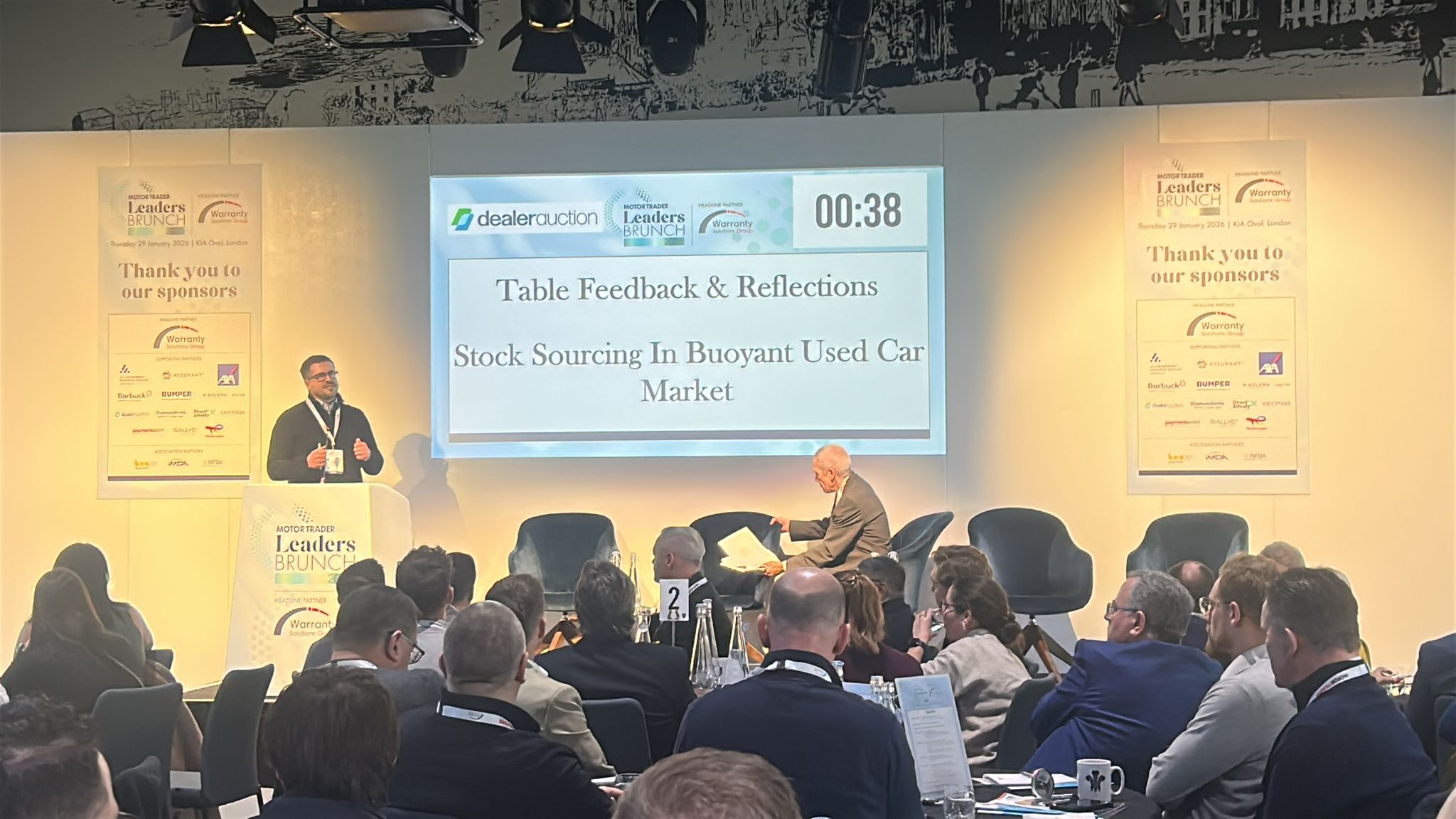
Dealer Auction hosted a table discussion focused on stock sourcing in a buoyant market, facilitated by Sales Director Jason Symes and joined by Kieran TeeBoon. The aim was simple. To move past surface-level optimism and understand what leaders are really grappling with day to day.
A market that feels tighter than it looks
One of the clearest insights from the discussion was how much sourcing fundamentals have shifted in a relatively short space of time. Several leaders noted a sharp reduction in part exchange volumes, with transactions that once relied heavily on PX now increasingly diverted through car buying services and agency-style models.
In some cases, manufacturers were reported to have actively encouraged customers to take part exchanges elsewhere. The result is less captive stock, greater reliance on external sourcing, and increased competition for the same vehicles.
What looks like a buoyant market on paper now feels far more constrained when it comes to control.
Prime stock pressure and margin reality
The discussion quickly turned to the pressure on prime stock. Five to seven year old vehicles remain highly desirable, but supply is limited and competition intense. Leaders highlighted how buyer fees on prime vehicles can sit between £400 and £700, eroding already tight margins before a car even reaches the forecourt.
Some participants referenced metal margins below £500, particularly at scale, with profitability increasingly dependent on add-ons rather than the vehicle itself. In that environment, buying cars at auction becomes less about access and more about precision.
Jason Symes reflected on the shift in focus this creates.
“What really came through was how much sourcing has become about decision quality. Leaders aren’t struggling to buy stock, they’re working much harder to make sure what they buy still stacks up once all the costs are factored in.”
EVs as a sourcing variable, not a separate conversation
EVs featured naturally in the discussion without dominating it. Some businesses around the table now see EVs making up close to 30% of their used stock, while others are actively targeting sub £30,000, and even sub £20,000, EVs to meet growing demand from mid and late adopters.
The insight was not that EVs are a risk to be avoided, but that they need to be treated with the same sourcing discipline as any other vehicle. Pricing, time to sell, and buyer alignment were all seen as critical, particularly as EV residual uncertainty continues to influence wider sourcing decisions.
Diversification emerges as a competitive advantage
Across the table, one theme consistently resurfaced. Diversification. Not just of stock, but of sourcing routes.
Leaders spoke about the importance of protecting part exchange opportunities, reducing leakage to car buying services, and broadening sourcing strategies beyond traditional channels. Online car auctions, trade car auctions, and direct routes all play a role, but reliance on any single source was seen as an increasing risk.
Kieran TeeBoon linked this back to wider market signals.
“When we look at the trends coming through our Retail Margin Monitor and EV Performance Review, the businesses protecting margin tend to be the ones adapting early. They diversify sensibly, stay disciplined on price, and don’t assume the market will always absorb stock in the same way.”
This is where having a clear sourcing framework becomes critical. Dealer Auction’s Q1 trade sourcing playbook breaks down how dealers can assess sourcing routes, buyer alignment, and pricing discipline to reduce risk and improve decision quality when buying cars at auction in competitive conditions.
What this insight signals for 2026
The discussion closed with a forward-looking question. If the market remains buoyant into 2026, what sourcing habits might dealers regret not changing sooner?
The answers centred on overreliance on familiar routes, holding stock too long in pursuit of perfect margins, and underestimating how quickly buyer behaviour can shift.
Dealer Auction continues to engage closely with dealers across the market to understand these pressures and share insight that supports better-informed sourcing decisions as conditions evolve.