

Dealers are operating in a market where the right vehicles are not always easy to find, and desirable stock can move quickly. At the same time, sourcing has become more fragmented. Opportunities are spread across auctions, classified sites, trade platforms, supplier feeds and direct sources, leaving buyers to jump between tabs, repeat searches and compare vehicles manually.
The challenge is not simply finding stock. It’s identifying the vehicles that are right for your forecourt quickly enough to act with confidence.
For busy dealers, time has become one of the most valuable parts of the buying process. Every extra search, every extra platform and every extra “maybe” vehicle adds friction. When margins are tight and customers are selective, a smarter sourcing process can make the difference between securing a vehicle with strong retail potential and missing the opportunity altogether.
Cut the platform-hopping
A good place to start is reducing platform-hopping. Dealers shouldn’t have to accept that stock sits in lots of different places and then build their day around chasing it.
The better approach is to bring more stock sources into one workflow, so opportunities can be compared side by side. That makes it easier to spot vehicles that fit your forecourt, review pricing and margin potential, and move faster when the right car appears.
For dealers, that means less time bouncing between auctions, classified sites and supplier platforms, and more time focusing on vehicles with genuine retail potential.
Make alerts work harder
Alerts can help, but only if they’re genuinely useful. More alerts aren’t always better. In fact, they can become another source of noise if they simply flag every vehicle that matches a broad make, model, age or mileage search.
Smarter alerts should reflect how a dealer actually buys. If you know which stock profile works for your forecourt, you shouldn’t have to keep rerunning the same searches.
Look for tools that can factor in more detailed criteria, such as vehicles close to your postcode, estimated margin, or stock with a specific Autotrader Retail Rating or higher. The aim is not to see everything. It’s to see what matters.
Use retail demand to prioritise
Retail demand signals should play a bigger role in deciding where dealers spend their time. It’s easy to lose valuable hours spreading attention across every available vehicle, when the smarter move is to shortlist the most appropriate stock first.
Metrics such as Retail Rating and days to sell can help highlight vehicles that are more likely to retail well. That gives buyers a clearer view of which opportunities deserve a closer look, rather than relying on instinct alone or reacting to whatever appears first.
The best sourcing decisions combine a dealer’s experience with live retail insight. Gut feel still matters, but it works better when the data is doing some of the heavy lifting.
Expect more from recommendations
Recommendations are another area where dealers should expect more. Many tools simply show buyers more of the same, such as another Ford Focus because they viewed one earlier. That might be relevant, but it’s also fairly limited.
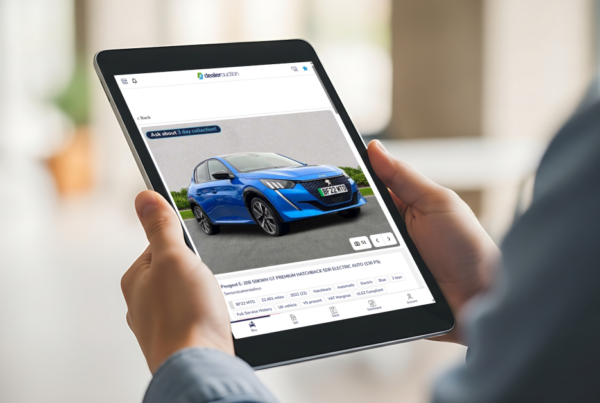
Dealer Auction takes a broader view. Recommended stock is based on a mix of browsing behaviour, bidding behaviour and Autotrader forecourt data, helping surface vehicles that are more relevant to a dealer’s forecourt and more likely to make money.
That focus on smarter sourcing is one of the reasons Dealer Auction has been named winner of the Car Dealer Power Award for trade-to-trade stock acquisition for the second year running.
It’s a strong endorsement, but more importantly, it reflects what dealers need now: less wasted time, better signals and a faster route to the vehicles that deserve their attention.
The advantage is finding what fits first
In a tighter market, the most successful dealers won’t simply be the ones looking in the most places. They’ll be the ones finding the right opportunities first.
With wholesale stock spread across more channels, the opportunity is to source with more focus, not more faff. Better signals, smarter alerts and more relevant recommendations can help dealers spend less time searching, and more time buying vehicles that are right for their forecourt.